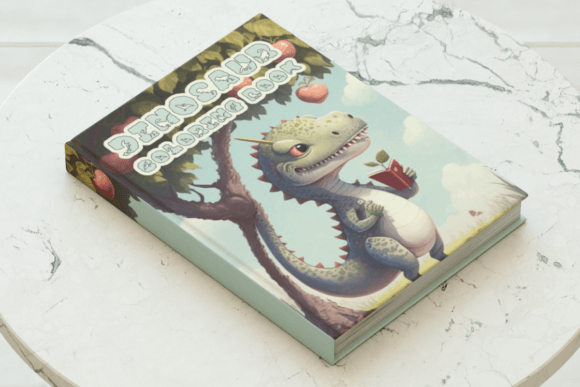
Choosing a Ready-Made Dinosaur Coloring Book Cover: What Dinosaur Cover VOL 1 Brings to Your Publishing Project
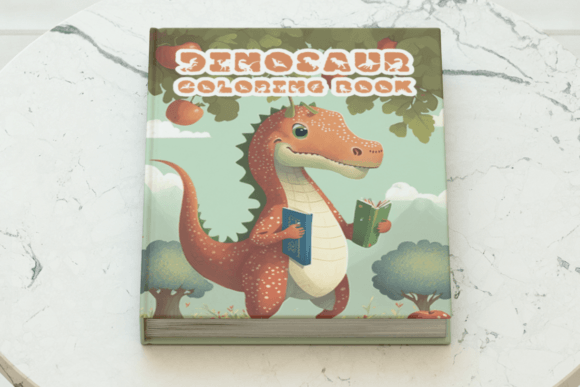
Publishing a coloring book on Amazon KDP or another print-on-demand platform involves dozens of small decisions, and the cover often carries more weight than newcomers realize. A compelling cover can help a dinosaur-themed activity book stand out in a crowded marketplace, while a mismatched or amateurish design can quietly work against even the most carefully crafted interior pages. Dinosaur Cover VOL 1 enters this space as a pre-designed cover template built specifically for low-content and no-content children's books, offering a targeted solution for creators who want to move quickly without sacrificing visual appeal.
What makes this particular resource worth examining is not just the artwork itself, but the practical packaging: a single high-quality cover delivered across multiple file formats—PNG, PDF, and PSD—all sized at 8.5" x 11". This article walks through what the template actually provides, how it compares with alternative approaches to cover creation, and the situations where it makes the most sense for your publishing workflow.
Understanding the Core Offer: One Cover, Multiple Formats
Unlike bundled collections that throw dozens of covers into a single download, Dinosaur Cover VOL 1 takes a focused approach. It delivers one professionally designed cover, but provides it in three distinct file types that serve different stages of the publishing process. The PNG version gives you an immediate, press-ready image suitable for quick uploads and previews. The PDF version preserves vector elements and high-resolution details, making it easier to work with when print specifications demand exacting standards. The PSD file—the Photoshop format—opens the door to customization, allowing you to adjust text, layer placement, and minor design elements if you have the right software and skills.
This multi-format delivery addresses a practical reality that many self-publishers encounter: different platforms and workflows demand different file types. What works for a KDP upload might not be ideal for IngramSpark or for creating promotional mockups on social media. Having all three formats from the start eliminates the need to convert files later, which can sometimes introduce compression artifacts or unexpected formatting shifts.
Where Pre-Made Covers Fit into the KDP Publishing Landscape
The broader category of pre-made book covers exists along a spectrum. On one end, you find highly generic templates that could apply to almost any non-fiction topic—simple geometric patterns, abstract textures, or minimalist typography. On the other end, niche-specific covers drill down into a particular genre or theme, like dinosaurs, mermaids, trucks, or space exploration. Dinosaur Cover VOL 1 clearly belongs in the latter group. The design is built around a recognizable theme that parents, gift-givers, and young dinosaur enthusiasts will immediately understand when browsing thumbnail images on Amazon.
This thematic specificity is both a strength and a limitation, which merits honest consideration. If your coloring book focuses exclusively on dinosaurs—especially if it targets the 4-8 year-old range where bold, friendly illustrations perform well—a cover like this aligns directly with reader expectations. The browsing parent sees the cover, instantly knows what the book contains, and can make a quick decision. That alignment reduces the cognitive friction that sometimes causes potential buyers to scroll past.
However, if your interior pages cover a broader range of prehistoric creatures, or if the book leans toward a more realistic, scientific illustration style, a cover designed with a playful, kid-friendly dinosaur aesthetic might create a disconnect. The cover sets expectations, and when those expectations don't match the interior, you risk disappointing readers—and disappointing readers leave reviews that reflect that gap.
Comparing Pre-Made Templates with Custom Design and DIY Approaches
When evaluating Dinosaur Cover VOL 1, it helps to position it among the three main paths available to self-publishers: pre-made templates, custom illustration, and fully do-it-yourself design using tools like Canva or Adobe Express.
Custom illustration offers the highest ceiling for originality. Working with a freelance illustrator or designer allows you to commission dinosaur artwork that matches your exact vision—specific species, particular color palettes, a precise mood. The tradeoff, predictably, involves cost and time. A single custom cover illustration can range from $50 to several hundred dollars depending on the artist's experience and the complexity of the request. Revision rounds add time, and if you're testing multiple book concepts, that investment multiplies quickly.
DIY design using accessible tools has become increasingly popular, especially among creators running lean operations. Canva's template library, for example, includes dinosaur-themed elements that can be combined into a cover. The risk here is that many other publishers are using the same assets. When multiple dinosaur coloring books share noticeably similar cover elements, the browsing experience becomes repetitive, and individual books struggle to differentiate themselves. Additionally, the typography skills required to balance title text, subtitle placement, and author name positioning are often underestimated. What seems simple in a template preview can look awkward when printed at full size.
Pre-made templates like Dinosaur Cover VOL 1 occupy a middle ground. The artwork is professionally designed and unique to the template—at least within the scope of the marketplace where it's sold. The cost sits well below custom work, often comparable to a single month of a stock photo subscription. The time investment shrinks to minutes: download, possibly customize text layers, and upload. This speed-to-market advantage matters if you're building a catalog of multiple titles or testing which themes resonate with your audience before committing larger resources.
Format Flexibility and the Practical Value of the PSD File
Among the files included in Dinosaur Cover VOL 1, the PSD deserves particular attention because it marks a dividing line between truly fixed templates and those that offer room for adaptation. A flat PNG or PDF file gives you exactly what you see. If the template includes placeholder text for a title or subtitle, you would need to overlay new text using separate software, and integrating that text seamlessly with the background artwork can prove tricky.
A layered PSD file, by contrast, typically separates the artwork, background, and text elements onto different layers. This means you can change the book title, adjust font choices, or reposition design elements without disturbing the core illustration. For publishers who want to create a series—say, "Dinosaur Coloring Book for Kids Ages 4-6" followed by "Dinosaur Coloring Book for Kids Ages 6-8"—the PSD file allows quick title swaps while maintaining visual consistency across the series. Brand recognition builds when covers share a recognizable design language, and a customizable template supports that strategy.
The caveat is that Photoshop proficiency varies widely among self-publishers. The PSD format assumes access to Adobe Photoshop or a compatible alternative like Affinity Photo or Photopea. If your workflow relies entirely on browser-based tools, the layered file might be less immediately useful than the PNG or PDF. That said, even without editing capabilities, the ready-to-use formats still provide a complete cover solution.
Sizing Considerations and Print-on-Demand Compatibility
The 8.5" x 11" dimensions specified for Dinosaur Cover VOL 1 align with one of the most popular trim sizes for children's coloring books on Amazon KDP. This size provides ample page space for young children to color without the book becoming unwieldy to handle. It also matches what many customers expect when browsing the coloring book category, where larger formats tend to dominate.
When preparing a cover for KDP or similar platforms, the total cover file must account for the front cover, back cover, and spine—all combined into a single spread. The spine width depends on the page count of your interior file. A pre-made cover template typically provides the front cover design, and the publisher needs to extend or adapt the background for the back cover and spine. Some publishers handle this by adding a solid color or pattern continuation in their design software. Others use KDP's cover creator tool to integrate the front cover image into a full wrap. Knowing your page count before finalizing the cover file saves time and prevents rework.
Decision Factors: When Dinosaur Cover VOL 1 Makes Sense
Given the characteristics described above, several scenarios emerge where Dinosaur Cover VOL 1 fits particularly well:
- You are launching a first or early title and want to minimize upfront costs while still presenting a polished, market-ready cover. The template removes the design learning curve without requiring a freelancer budget.
- You are testing the dinosaur coloring book niche and prefer to validate market interest before commissioning custom artwork. If the book performs, you can reinvest profits into original illustrations later.
- Your interior content matches the cover's visual tone. If the coloring pages feature friendly, cartoon-style dinosaurs aimed at younger children, the cover reinforces that expectation rather than undermining it.
- You value speed. With the files ready to download and upload, the gap between finishing interior pages and publishing can shrink to hours rather than weeks.
- You plan a series and want to maintain design consistency across multiple dinosaur-themed titles, with the PSD file enabling efficient title changes.
When Another Approach Might Serve You Better
Equally important is recognizing when a product like Dinosaur Cover VOL 1 may not be the strongest option for your specific situation:
- Your dinosaur book targets an older audience or features realistic, scientific, or anatomically detailed illustrations. A playful cover aimed at young children could misrepresent the interior and lead to mismatched reader expectations.
- You require extensive customization beyond what the PSD layers allow. If the cover needs substantial alterations—different background scenes, entirely new dinosaur species, or a dramatically different color scheme—starting from a custom illustration may ultimately be more efficient than heavily modifying an existing template.
- You have concerns about template exclusivity. Pre-made covers are sold to multiple buyers. While the total number of purchasers for any given niche template is usually modest, there is no guarantee that another dinosaur coloring book won't share your exact cover. Platforms that disclose purchase counts or limit sales per template can mitigate this concern, but it remains a factor to weigh.
- Your book dimensions differ from the 8.5" x 11" standard. Resizing a cover designed for specific proportions can introduce stretching, cropping issues, or resolution loss that degrades print quality.
Evaluating Quality, Resolution, and Print Readiness
Beyond the theme and formats, practical quality considerations determine whether a cover template performs well in print. The files included in Dinosaur Cover VOL 1 are described as high quality, which for print purposes typically means a resolution of 300 DPI (dots per inch) at the specified trim size. Lower resolutions risk appearing pixelated or soft when printed, especially on the glossy or matte covers common in POD coloring books.
Color profile is another detail that affects print results. RGB color spaces look vibrant on screens but can shift when converted to the CMYK printing process used by KDP and similar services. If the PSD file allows profile adjustments, converting to CMYK before export can help the printed cover more closely match what you see on your display. This step is not always necessary—KDP's print process handles RGB-to-CMYK conversion automatically—but the results can vary, and some publishers prefer to control the conversion themselves.
How the Single-Cover Model Compares with Bundled Alternatives
Some marketplaces and design platforms offer cover bundles—collections of 10, 20, or 50 templates covering multiple niches for a single price. Dinosaur Cover VOL 1 takes a different path by delivering one cover with depth rather than breadth. This single-cover approach has several implications worth considering.
Bundles appeal to publishers planning to release across diverse niches—dinosaurs, unicorns, mandalas, vehicles, and so on. The per-cover cost drops significantly, and having a library of designs on hand can inspire new book ideas. But bundle quality can be inconsistent. Some designs within a collection may look polished while others feel like filler. The time spent sifting through dozens of covers to find one that works for your specific project can offset the cost savings.
A single, focused cover like Dinosaur Cover VOL 1 avoids that sorting process. You evaluate one design against your needs and decide. If it fits, the decision is clean and fast. If it doesn't, you haven't invested in a bundle full of irrelevant templates. The tradeoff, naturally, is that you pay for exactly one design, and the per-unit cost may be higher than the per-cover cost within a large bundle. Publishers with narrow, well-defined project pipelines often find the single-cover model more efficient; those casting a wide net may lean toward bundles.
Practical Steps for Using the Cover Template Effectively
Once you have downloaded the files from Dinosaur Cover VOL 1, a few practical steps can help ensure the final result meets platform requirements and looks professional in customer previews. First, open the PSD file if you have compatible software and confirm that the title placeholder text is editable. Replace it with your actual book title, checking that the font size and positioning remain balanced within the overall composition. If the template uses fonts not installed on your system, you may need to source those fonts or substitute a similar typeface.
Second, create the full cover spread if your platform requires it. For KDP, this means combining the front cover, a spine sized to your page count, and a back cover into a single PDF. The back cover can be a solid color pulled from the front design, a continuation of a background pattern, or a simple layout with a description of the book. Even a minimal back cover looks more intentional than leaving it blank.
Third, preview the cover at thumbnail size. Many Amazon browsers first encounter a book as a small image among dozens of search results. A cover that reads clearly at thumbnail scale—with legible title text and a recognizable central image—performs better than one that only reveals its quality at full size. The bold, thematic nature of a dinosaur cover typically holds up well in this test, but verifying it yourself before publishing is a worthwhile habit.
Long-Term Thinking: Building a Catalog with Intentional Cover Choices
For self-publishers building a long-term presence in the low-content space, cover decisions accumulate. Each template choice shapes the visual identity of a growing catalog. Using Dinosaur Cover VOL 1 for a single dinosaur title is a straightforward, low-risk decision. But if you plan to release multiple dinosaur books, consider how this cover relates to future designs. A consistent style across titles builds brand recognition; radically different cover styles from book to book can make your catalog feel disjointed.
Some publishers address this by using a single template as the foundation for an entire series, varying only the title and perhaps a subtitle indicating different age ranges or difficulty levels. Others deliberately vary cover styles to appeal to different sub-audiences within the broader dinosaur coloring niche. Both strategies can work, but making the choice intentionally—rather than drifting into it through a series of unrelated template purchases—tends to produce a more coherent catalog over time.
The availability of the PSD file in Dinosaur Cover VOL 1 supports the series approach particularly well, since consistent design elements can be preserved while specific details change. Even small adjustments, like shifting the color of a title treatment or adding a volume number badge, can signal to returning customers that a new book belongs to a familiar collection.
Weighing Cost Against Value in the Low-Content Publishing Model
Low-content publishing operates on different economics than traditional book publishing. Margins per sale are often modest, and profitability depends on volume across multiple titles. In this context, every upfront cost—whether for cover design, interior templates, or software—gets amortized across the sales of each book. A cover template priced accessibly contributes little overhead to the per-title cost, meaning even modest sales can recoup the investment quickly.
What distinguishes Dinosaur Cover VOL 1 in this economic equation is not just the price point but the reduction in time and decision fatigue. For a publisher managing five, ten, or twenty titles, the hours spent designing or commissioning individual covers add up. A ready-to-use template that requires minimal adjustment frees up that time for other tasks: keyword research, category selection, advertising, or developing new interior content. The cover becomes a solved problem rather than an open decision, and that clarity carries practical value even if it doesn't appear on a spreadsheet.
Publishers evaluating this resource can think of it less as a product purchase and more as a workflow decision. If your publishing process benefits from reducing the number of creative decisions required per title, a focused, well-executed template like this one fits neatly into that approach. If your process thrives on customization and hands-on design, you may find greater satisfaction—and perhaps better results—by starting from scratch or collaborating with an illustrator who understands your specific vision for what a dinosaur coloring book should look like.