Debt Snowball Tracker KDP Interior: A Structured Resource for Financial Progress
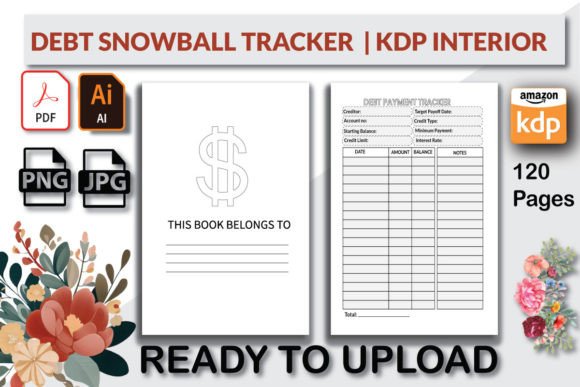
For anyone helping others organize their finances—or building a product line around printable planning tools—the Debt Snowball Tracker - Kdp Interior fills a very specific need. It is a pre-designed, fully editable interior template built for Amazon KDP, giving creators a ready-to-upload foundation for a debt repayment journal. Rather than starting from a blank artboard, you get 120 consistently formatted pages in a standard 8.5 x 11 inch trim size, with a layout focused on the debt snowball method. That method, popularized by personal finance educators, prioritizes paying off smallest debts first for psychological momentum.
What sets this product apart is not just the concept but the delivery: a print-ready PDF combined with an editable Adobe Illustrator file. That dual format means you can use it as-is for a no-fuss publishing experience, or customize fonts, colors, and minor layout details to match a specific brand or audience. The interior has been tested on Amazon KDP, so practical concerns like margin safety, bleed, and file compatibility are already addressed—saving hours of trial and error.
What Exactly Is Included in the Debt Snowball Tracker - Kdp Interior?
At its core, this template is a 120-page book interior designed around tracking multiple debts and visualizing paydown progress. A typical debt snowball tracker needs to capture starting balances, minimum payments, extra payments, and a running total for each debt. This interior provides structured tracking sheets that walk a user through these steps without clutter or overwhelming complexity. The consistent structure across pages helps readers build a habit, which is essential for the snowball method to work in real life.
Beyond the raw content, the editable nature of the template deserves emphasis. Because it’s built in Adobe Illustrator, you can replace default headings like “Debt Snowball Tracker” with a custom title, swap out the suggested color palette, or insert additional guidance pages before the tracking sections. That flexibility is valuable for authors, coaches, or financial bloggers who want the interior to feel bespoke rather than generic. The template is labeled “Very High-Quality 100% Original Design,” and the clean layout supports that claim—there are no obvious duplicated elements or rushed constructions.
Why a Dedicated Debt Snowball Tracker Remains Relevant
The digital age hasn’t eliminated the demand for physical tracking tools. Many people respond better to pen-and-paper accountability, especially when tackling emotional topics like debt. A well-designed tracker turns an abstract goal into a tangible, page-by-page experience. The debt snowball method in particular relies on small wins, and writing down each zeroed-out balance reinforces progress. A printable KDP interior serves that demographic directly, whether the end user is a budgeting beginner, a couple working through shared debts, or a participant in a financial coaching program.
For niche publishers, debt management remains a steady category on Amazon. Low-content and medium-content books like trackers and journals often perform well when they target a clear use case. This template removes the heavy lifting of interior design so the creator can focus on cover design, keyword strategy, and market positioning.
Assessing the Practical Strengths of This Template
One of the most immediately valuable aspects is the print-ready PDF. KDP’s print validation can be unforgiving, and a file that has already passed testing lowers the technical barrier significantly. The specs—8.5x11 inches, 120 pages—strike a balance between ample tracking space and a spine thickness that doesn’t feel flimsy. A 120-page interior yields a professional paperback that can hold enough tracking sheets for several months of debt repayment, which aligns with realistic snowball timelines.
The editable Illustrator file adds another layer of utility. For instance, you could adapt the interior for a specific currency by changing symbols, or insert motivational quotes between tracking sections. If you publish in multiple languages, you can translate headings without rebuilding the entire layout. While Illustrator proficiency is required for deep edits, the clean vector structure suggests organized layers and easy-to-find text elements, though that depends on the original designer’s file organization. Even without major edits, changing fonts to match a brand guide is straightforward.
Quality, Usability, and Real-World Application
From a production standpoint, the “100% Original Design” claim matters. KDP’s content guidelines are strict about recycled or plagiarized interiors. Using an original template reduces the risk of account flags and ensures the final product has its own visual identity. The high-quality designation often implies proper alignment, consistent typography, and attention to detail like page numbers or subtle graphic accents. For a tracker, those small touches matter because the user will stare at the same layout day after day; messy spacing or inconsistent fonts would erode trust.
On the usability front, a 120-page structure can be organized in several practical ways: one debt per page or one account summary per spread, with additional pages for notes, goal-setting, and payoff celebrations. The template likely includes dedicated sections, but reviewers have noted the power to rearrange or duplicate pages using the AI file. That adaptability means you can tailor the journal to a specific audience—say, a version strictly for credit card debt, or one that includes student loans, auto loans, and medical bills.
It’s also worth considering the limitations. An Illustrator-based template is less accessible for those who don’t own or know how to use Adobe’s software. While the print-ready PDF works immediately, customization requires a subscription and a learning curve. Additionally, 120 pages is a fixed length; creators who want a shorter or longer journal will either need to trim or expand content manually, though the template provides a solid skeleton. Finally, because the interior is designed for the debt snowball, it may not suit an audience that prefers the debt avalanche method (paying highest interest first). However, smart customization could repurpose the structure for any sequential payoff system.
Who Gains the Most From This KDP Interior?
The primary audience is KDP publishers, printables shop owners, financial coaches, and content creators who want to add a physical product to their income stream or client toolkit. For a coach, offering a branded debt snowball journal as part of a course or workshop increases perceived value. For a YouTuber or blogger, it’s a complementary product that turns free advice into a tangible sale. Even a freelancer who designs custom interiors for clients could use this template as a starting point, saving hours on each project.
Small businesses teaching financial literacy might adapt the interior for community workshops or workplace financial wellness programs. The editable nature means they can insert their logo, contact information, or local resources. The template’s KDP testing also makes it suitable for authors who have written a debt-management guide and want a companion workbook without hiring a separate designer.
Serious hobbyists or individuals managing their own debt might also purchase the template if they have Illustrator access, simply because printing 120 tailored pages from a home printer is cheaper and more satisfying than buying a generic tracker. In that case, the value lies in the professional design that would take dozens of hours to replicate from scratch.
Comparing This Template to Alternative Solutions
Many free debt snowball spreadsheets exist, but they lack the tactile, offline accountability a book provides. Other KDP interiors in this niche may be limited to Canva templates or static PDFs with no customization path. The Illustrator editable version offers a higher ceiling for those willing to learn or hire a designer. While the price point for this type of template is typically modest, the time saved on layout, testing, and design iteration often far outweighs the cost—particularly for someone who values publishing speed.
From a quality standpoint, original designs tend to offer better print consistency than heavily modified freebies. The emphasis on 100% original also suggests the vector assets and layout don’t rely on licensed stock elements that might restrict commercial use. For KDP publishing, that clarity is crucial.
Potential Pitfalls and How to Navigate Them
If you’re new to Adobe Illustrator, the learning curve is real. While the template is “fully editable,” making confident changes requires understanding text frames, layers, and master elements. One practical recommendation is to open the AI file, immediately save a copy, and then experiment with simple edits like changing the title or font before altering the structure. If you plan to publish multiple editions, consider setting up layer comps or artboards for efficiency.
Another consideration is the narrow niche. A debt snowball tracker is not a general-purpose journal; it fits a specific financial philosophy. That’s a strength for targeted marketing but a limitation if you want broad appeal. However, the underlying structure—progressive goal tracking with small wins—could be adapted for other habits like saving an emergency fund or paying off a mortgage incrementally. The editable file makes that pivot feasible with some creative adjustments.
Finally, while 120 pages is generous, ensure the tracking logic doesn’t become repetitive. If the template includes a fixed number of identical pages, users might feel they’ve seen the same thing too many times. A smart modification could involve inserting milestone pages (e.g., 25% paid, 50% paid) or reflection prompts every 20 pages to break monotony. That kind of thoughtful editing elevates the user experience and makes the journal more likely to earn positive reviews.
Realistic Expectations and Long-Term Value
No template guarantees bestseller status. Market research, cover design, and keyword optimization still rest on the publisher. However, the Debt Snowball Tracker - Kdp Interior removes a significant variable: interior design quality. A clean, tested, editable foundation lets you launch faster and iterate based on customer feedback. Because it’s a digital file, you can reuse it across multiple projects, creating variations for different debt types or audiences without additional licensing costs.
For coaches and educators, the long-term value extends beyond publishing. The template becomes a durable workshop asset, a client handout, or a lead magnet that reinforces your brand’s authority in personal finance. Even if you never publish on Amazon, the interior can serve as a professionally printed tool for in-person sessions.
Is This Template the Right Fit for Your Project?
If your goal is to create a debt snowball journal that feels polished, consistent, and ready for upload with minimal friction, this template makes sense. It’s a pragmatic purchase for intermediate KDP creators who understand the platform’s requirements and want to sidestep tedious formatting. For absolute beginners, the Illustrator requirement might be a barrier, though the included PDF still allows direct publishing. The key is matching the template’s design language with the audience you intend to serve—whether that’s a no-nonsense financial workbook or a more encouraging, colorful tracker with motivational prompts.
The product’s positioning as “100% Tested on Amazon KDP” and “Very High-Quality 100% Original Design” indicates a creator who understands the self-publishing ecosystem. When evaluating similar products, look for evidence of thoughtful structure, not just page count. The combination of editable source files and print-ready output signals a resource built for diverse workflows, from rapid publishing to fully branded custom editions. For many creators in the financial education and printable planning space, this interior could become a reliable, reusable asset that shortens the path from idea to income.