Gift Log Book: A Simple Tool That Saves You from Post-Event Chaos
After any major celebration, the quiet moments that follow can feel overwhelming. You look at a stack of beautifully wrapped presents, a pile of cards, and a guest list filled with people who went out of their way to celebrate with you. The gratitude is genuine, but the organizational task ahead is real. This is exactly where a Gift Log Book steps in and quietly transforms a potential headache into a smooth, manageable process.
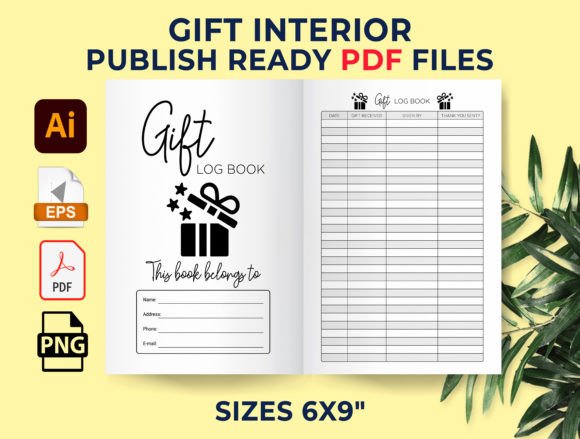
This particular gift log offers a compact 6″ x 9″ format with 120 pages, giving you plenty of room to record gifts received at weddings, bridal showers, baby showers, birthday parties, or any gathering where people show up with something thoughtful. Beyond simply listing items, it includes a dedicated space to track whether a thank-you note has been sent, which turns out to be the feature most people don't realize they need until they're three weeks past the event with a nagging sense they've forgotten someone.
What Most People Get Wrong About Gift Tracking
The biggest mistake isn't failing to write things down. It's relying on memory or scattered methods that fall apart under pressure. You might think you'll remember who gave you the ceramic serving bowl or the embroidered baby blanket, but after a long, emotional day, details blur quickly. What's worse is discovering a card separated from its gift with no way to reconnect them.
Another common oversight involves assuming the gift registry or online purchase records will fill in the gaps. They won't. Registry lists tell you what was bought, but they don't always capture who bought it or whether the item arrived with a personal note you'd want to acknowledge. A well-organized Gift Log Book puts everything in one place under your control, not scattered across retailer websites and spreadsheets you'll forget to update.
Why a Dedicated Log Works Better Than Improvised Solutions
It's tempting to grab a blank notebook or open a notes app and call it good enough. The problem with that approach is consistency. A generic notebook lacks the structure that keeps entries uniform and easy to review later. You might scribble a name and gift on one page, then forget to note the thank-you status on another. Over time, those gaps create confusion you can't easily resolve.
The Gift Log Book solves this by providing a page-per-day format with simple tracking fields that prompt you to record the essential details every time. There's space for the giver's name, a description of the gift, the date received, and a clear marker for thank-you card status. The design eliminates guesswork, so you're never staring at a half-filled page wondering what you intended to write.
The Thank-You Note Trap Nobody Warns You About
Here's a scenario that plays out more often than anyone admits. You sit down to write thank-you notes two weeks after the event. You pull out your list and realize you marked certain gifts but didn't note whether you already mailed those cards. Now you're stuck cross-referencing vague memories and half-remembered trips to the post office. Some people end up sending duplicate notes, while others accidentally skip someone entirely.
Having a designated checkbox or status field next to each entry removes this ambiguity entirely. When you use a Gift Log Book with thank-you tracking built in, you mark the status immediately after dropping that envelope in the mail. Later, a quick glance shows you exactly who still needs a note and who's already been thanked. It's a small habit that prevents awkward silences and hurt feelings.
Choosing the Right Format Before You Buy
Not all gift logs are created equal, and overlooking format details can lead to frustration. Some people download a digital template expecting flexibility, only to find the file type doesn't work with their software or printing setup. This particular log comes with multiple file formats—PDF, AI, EPS, and PNG—which means you can print it professionally, use it with design software, or even take it to a local print shop without compatibility headaches.
The 300 DPI high-resolution specification matters more than you might think. Lower-resolution files produce fuzzy prints that look unprofessional, especially if you plan to bind the pages into a keepsake. After all, this log isn't just a utility item. Years from now, you might look back at those entries and remember the people and moments behind each gift. Crisp, clean printing honors those memories.
Page Count and Longevity: Don't Underestimate Your Needs
A frequent miscalculation involves underestimating how many pages you'll actually use. A smaller event like an intimate baby shower might only fill twenty pages, but what about a wedding with 150 guests? What if you host multiple smaller celebrations leading up to the main event? With 120 pages on offer, you have breathing room. You won't run out halfway through recording gifts, and the extra pages let you add notes, reflections, or even attach small mementos without crowding the essential information.
The no-bleed design also deserves attention. Bleed settings in printing affect whether ink runs to the edge of the page. A no-bleed layout means the content stays within printable margins, which prevents important text from getting cut off during printing or binding. If you've ever printed something only to find the edges trimmed away, you'll appreciate knowing this detail was handled correctly.
Practical Habits That Make the Log Work Harder for You
Design alone doesn't guarantee success. How you use the Gift Log Book determines whether it becomes an indispensable tool or another half-used notebook on a shelf. The most effective approach starts before the event even begins. Keep the log accessible during gift-opening, or designate someone trustworthy to record entries as you go. This real-time documentation captures details while they're fresh, including the giver's exact words or special context you'll want to mention in your thank-you note.
Write more than just the object name. A description like "set of blue towels" works, but adding context such as "from Aunt Marla—she mentioned these are from the same shop we visited together last spring" gives you material for a heartfelt, specific thank-you message later. The notes section in your log exists precisely for these personal touches that generic tracking methods overlook.
Avoiding the Post-Event Scramble
Waiting too long to start recording is a mistake with compounding consequences. Even a delay of a few days allows your memory to fade and introduces errors. Cards get misplaced. Similar gifts blur together. Someone's handwritten note falls out of the box and lands under the couch. By the time you sit down to organize, you're piecing together fragments rather than documenting clear facts.
A better strategy involves setting aside a quiet hour the day after the event. Bring the gifts, the cards, and your Gift Log Book together in one place. Work through each item methodically, confirming that every card is still attached to its corresponding gift. If anything became separated, resolve it now while the event is still recent enough to reconstruct from memory and photos.
What to Check Before Printing or Purchasing
If you're sourcing a printable gift log, verify the file formats match your intended use. The inclusion of AI and EPS files alongside PDF and PNG means designers and advanced users can customize layouts or branding before printing. For most people, the ready-to-print PDF at 6″ x 9″ will be the go-to choice. Confirm your printer settings match the page dimensions exactly to avoid scaling issues that distort the layout.
Also check the KDP tested assurance if you plan to publish or sell a version through Amazon's Kindle Direct Publishing platform. A file that passes KDP's technical review has already been checked for margins, formatting, and compatibility, saving you from costly rejections or reformatting cycles. For personal use, this testing signals a reliable, professionally prepared file.
Making the Log Part of a Bigger Gratitude Practice
Beyond pure function, a Gift Log Book can anchor something more meaningful. The act of recording each gift and then confirming each thank-you note creates a rhythm of intentional gratitude. You're not just checking boxes. You're pausing to recognize the thoughtfulness behind every item, every card, every person who showed up. That awareness often gets lost when the task feels rushed or disorganized.
The unique design of a well-crafted log also turns it into a keepsake worth revisiting. Flip through the pages a year or five years later, and you'll find not just a list of objects but a snapshot of relationships and life seasons. Baby shower gifts that helped furnish a nursery. Wedding presents that still live in your kitchen. Birthday surprises from friends who have since moved away. A simple log quietly preserves those connections.
Steering Clear of Overcomplicated Systems
Some people over-engineer the tracking process. They build elaborate spreadsheets with formulas, color-coding, and multiple tabs. Then they abandon the system because it feels like data entry work rather than a helpful tool. Simplicity keeps you consistent. A page-per-day approach with straightforward fields reduces friction. You don't need to learn software or remember to charge a device. You just open the book and write.
The intro page included in this log gives you a gentle starting point rather than dropping you into blank pages without guidance. It sets the tone and reminds you why you're doing this in the first place. Sometimes that small nudge makes the difference between starting immediately and procrastinating until details slip away.
Expanding Beyond Weddings and Showers
While bridal and baby showers are the most common use cases, limiting this tool to those occasions misses its broader utility. Any gathering where people bring gifts or contributions deserves organized tracking. Anniversary parties, retirement celebrations, graduation gatherings, milestone birthdays, and even fundraisers or charity events benefit from the same structured approach.
You can adapt the log's simple format to different contexts without overthinking it. The "add or delete as much as you want" flexibility means you're not locked into a rigid template. Shorten entries for casual events. Add detail for more formal occasions. The log works with you rather than imposing unnecessary constraints.
A Practical Checkpoint Before You Commit
Ask yourself a few honest questions before choosing a Gift Log Book. Will the dimensions fit comfortably in your event bag or on your desk? At 6″ x 9″, this one balances portability with enough writing space. Do you prefer physical pages over digital, understanding that paper doesn't run out of battery and won't distract you with notifications? Will you actually use the thank-you tracking feature, or are you likely to ignore it and revert to memory? If the answer to the last question leans toward procrastination, the built-in prompts become even more valuable.
Also consider the print quality you want. A 300 DPI file produces results that look professional whether you print at home, at a copy shop, or through an online service. No one wants a blurry, pixelated log, especially when it may become a sentimental item.
Used thoughtfully, a Gift Log Book doesn't just organize information. It protects relationships by ensuring no act of generosity goes unacknowledged. That's a benefit worth far more than the modest effort of keeping a few pages filled out.