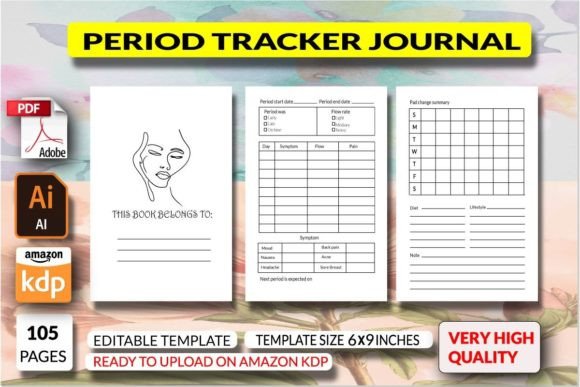
Period Tracker Journal
A period tracker journal is far more than a simple calendar. It is a dedicated space where individuals document the nuances of their menstrual cycle, capturing everything from start and end dates to flow intensity, physical symptoms, emotional shifts, and unexpected irregularities. In a world saturated with digital notifications and app fatigue, the analog act of writing in a period tracker journal is quietly reclaiming its place as a deliberate, private, and highly effective health practice. For adults navigating professional lives, creative pursuits, or entrepreneurial ventures, this tool offers a low-tech yet remarkably insightful way to understand the body’s rhythms and make informed daily decisions.
The Modern Shift Toward Personal Health Documentation
People are paying closer attention to their bodies than ever before. Wearable devices count steps and monitor sleep, while apps log nutrition and workouts. Amid this explosion of self-tracking, the menstrual cycle has emerged as a vital sign—a window into overall well-being. A period tracker journal fits neatly into this cultural pivot, offering a structured method for recording data that many health authorities now consider essential. Instead of relying solely on algorithm-driven predictions, individuals are turning to handwritten logs that encourage deeper reflection. This shift aligns with a broader movement toward proactive health management, where noticing subtle patterns can lead to earlier conversations with healthcare providers and more personalized self-care strategies.
The relevance of such journals crosses age brackets and lifestyles. A busy marketing professional might use one to spot connections between cycle phases and energy levels, helping her schedule high-stakes presentations during peak focus days. A freelance illustrator might track how certain symptoms affect creative flow. A small business owner trying to conceive might rely on detailed fertility cues that no app offers with the same tactile permanence. In each case, the period tracker journal transforms raw data into actionable personal knowledge.
Why a Physical Journal Still Matters in a Digital Age
Digital cycle trackers are ubiquitous, yet many users report feeling disconnected from the data they collect. Tap, swipe, dismiss—the experience can be transactional. A period tracker journal invites a slower, more intentional relationship with one’s health. There is no algorithm to misinterpret a symptom, no risk of data being shared with third parties, and no screen glare before bed. For professionals who spend hours in front of devices, the simple act of putting pen to paper can be a welcome analog ritual that reduces digital overload.
Privacy is another compelling factor. In an era of heightened awareness around personal data, a physical journal offers an inherently secure, offline record. This appeals not only to the privacy-conscious but also to anyone navigating health conditions where discretion matters. The journal becomes a trusted companion—no passwords, no updates, no cloud syncing glitches. It is always available, whether on a nightstand or packed in a work bag.
How a Well-Designed Journal Supports Consistent Tracking
Consistency is the cornerstone of any effective tracking habit, and design plays a pivotal role. A thoughtfully laid-out period tracker journal removes the friction that blank notebooks create. Instead of staring at an empty page wondering what to record, users are guided by intuitive prompts: start date, end date, flow level (light, medium, heavy), cramp severity, headaches, mood, sleep quality, and notes. This structure turns logging into a quick, almost effortless daily check-in rather than a chore.
The best journals anticipate real-life needs. For instance, a section for spotting or mid-cycle changes helps flag irregularities that might otherwise go unnoticed. A dedicated space for open-ended reflection allows the user to capture context—like travel, stress, or changes in exercise—which often influences the cycle. When the layout respects the user’s time and intelligence, the journal becomes a habit that sticks, not an abandoned stationery item.
From Blank Pages to Structured Templates: The Rise of Customizable Tools
For creators, coaches, and entrepreneurs, there is a growing opportunity to design and distribute period tracker journals that cater to specific audiences. A generic notebook might work, but a tailored template elevates the experience. This is where editable design files become invaluable. A high-quality period tracker journal template, such as one built in Adobe Illustrator at a practical 6” x 9” trim size with 105 pages, gives creators full control over fonts, colors, and additional sections. The original, fully tested design can be uploaded directly to print-on-demand platforms like Amazon KDP, significantly reducing the time required to launch a niche product.
Imagine a yoga instructor who wants to include chakra-aligned reflection prompts alongside cycle tracking. Or a nutritionist who adds a section for food cravings and meal notes. Using a proven, print-ready template as a foundation—rather than starting from scratch—lets these professionals focus on content and branding. The editable nature means every element can be customized to match a visual identity, making the end product feel truly unique. This flexibility aligns with the growing demand for personalized health tools and empowers small businesses to enter the wellness market efficiently.
Practical Benefits for Everyday Users
Using a period tracker journal consistently yields insights that go well beyond knowing when the next period will arrive. Over time, the recorded data reveals patterns: a recurring migraine two days before bleeding, a dip in energy mid-cycle, or a noticeable mood lift right after. These observations help an individual plan ahead, adjust workloads, and communicate more clearly with partners or colleagues. Instead of being caught off guard, she can anticipate and adapt.
The journal also serves as a powerful advocacy tool during medical appointments. When a healthcare provider asks about cycle length or symptom frequency, a detailed log provides concrete answers rather than vague recollections. This is especially valuable for those with conditions like polycystic ovary syndrome, endometriosis, or unexplained infertility. The period tracker journal transforms anecdotal experience into a data-rich narrative that supports accurate diagnosis and treatment planning.
Integrating a Period Tracker Journal Into a Busy Lifestyle
Many professionals worry that adding another habit will feel overwhelming. The key is integration, not addition. A period tracker journal can slide seamlessly into existing routines: morning coffee, evening wind-down, or the few minutes after a workout. Some users adopt a bullet-journal approach, using color codes for flow intensity or simple icons for common symptoms. Others pair it with a gratitude practice, jotting down a positive note alongside the day’s metrics.
For those who travel frequently or work irregular hours, the journal’s portability is a major advantage. A 6” x 9” format fits into most bags without bulk, and the absence of battery dependence means it works everywhere. There is no need to remember a password or worry about international data plans—just open and write. This frictionless access encourages compliance, which leads to richer, more useful long-term data.
The Entrepreneurial Angle: Creating and Selling Niche Health Journals
The market for wellness and self-care products continues to expand, and a period tracker journal occupies a unique intersection of health, productivity, and lifestyle. For freelancers, designers, and business owners, producing a print-ready journal represents a low-barrier entry into this space. An editable Adobe Illustrator template that has been fully tested on Amazon KDP removes the guesswork from technical specifications. Because the file is ready to upload, creators can avoid the pain of formatting issues, bleed settings, and margin adjustments that often derail first-time publishers.
Using such a template as a base, an entrepreneur can launch multiple variants—perhaps a minimalist edition, a floral design, or a version with undated pages for flexibility. The ability to alter text and graphics means the product can be adapted for different languages or cultural contexts. This scalability turns a single idea into a potential product line, appealing to diverse audiences without reinventing the wheel each time. The call to “share your project” embedded in the maker community encourages visibility: when a designer posts a photo of their customized journal on social platforms, it inspires others and creates organic marketing momentum.
What to Look for in a Quality Period Tracker Journal
Whether buying off the shelf or designing from a template, certain features elevate a period tracker journal from adequate to exceptional. First, page count matters—around 105 pages strikes a balance between providing enough tracking space for a full year and keeping the journal slim enough to handle daily. Second, the interior layout should be clean and uncluttered, with enough room for handwriting even on days with multiple symptoms to record. Third, the inclusion of prompts for mood, sleep, and energy levels adds holistic value without overwhelming the user.
For designers and sellers, the print-readiness of the file is non-negotiable. A template that has been rigorously tested on Amazon KDP—ensuring correct margins, safe zones, and color profiles—saves countless hours and prevents costly reprints. The editable source file in Adobe Illustrator means the creator can change every visual detail, from cover typography to interior icons, aligning the final product with a specific brand or aesthetic vision. This flexibility transforms a static product into a dynamic offering that can evolve with market feedback.
Looking Ahead: The Future of Personal Health Logging
As people seek greater autonomy over their health information, the role of analog tools will likely grow in parallel with digital solutions. A period tracker journal does not need to compete with apps; it can complement them. Some individuals may use an app for quick predictions but transfer key data to a journal for deeper analysis, or vice versa. This hybrid approach blends convenience with mindfulness, and it reflects a realistic, sustainable path forward.
The communal aspect of creating and sharing customized journals also points to a future where health tools are not just consumer goods but collaborative projects. When someone takes a template, tailors it to her own needs or her community’s needs, and shares the result publicly, she contributes to a culture of open, thoughtful health design. That act—encouraged by the “share your project” invitation—creates a feedback loop of inspiration and improvement. In this light, a period tracker journal is both a personal record and a canvas for broader conversation about how we understand and honor menstrual health.
Ultimately, the value of a period tracker journal lies in its quiet consistency. It does not send alerts or demand updates. It simply waits to be filled with honest, day-by-day accounts that accumulate into a deeply personalized health narrative. For the professional seeking to align work with natural rhythms, the creative soul tuning into cyclical ebbs and flows, or the entrepreneur building a compassionate brand, this simple tool offers a foundation of knowledge that no technology can replicate.