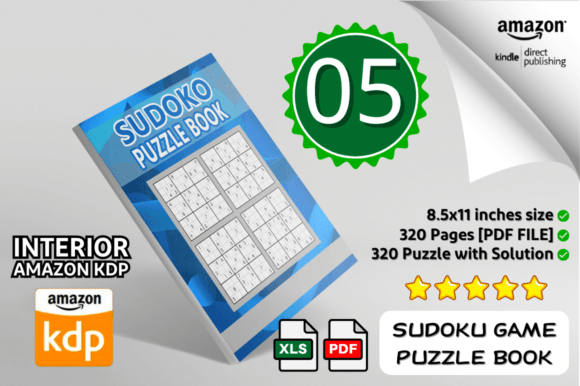
Sudoku Puzzle Book Easy Part 05: Logic Puzzles for Everyone
Many people spend their work breaks scrolling through social media or news feeds, only to feel more drained afterward. Sudoku Puzzle Book Easy Part 05 offers a genuinely restorative alternative — a compact mental workout that swaps digital noise for quiet, focused engagement. With 320 puzzles arranged in a smooth difficulty curve, this book proves that the easiest path to sharper thinking starts with a grid and a pencil.
Whether you’re a designer who needs to reset your visual attention between projects, a teacher searching for a screen-free classroom activity, or a busy professional who wants five minutes of clarity during a packed day, collections like this one fill a gap that many productivity tools cannot. They demand presence without overwhelming you.
What Makes This Collection Different
The puzzle book landscape is crowded, yet few editions focus on accessibility the way Sudoku Puzzle Book Easy Part 05 does. Each of the 320 puzzles is printed in a clear, legible format on well-proportioned grids. You won’t find smudged numbers or cramped layouts that make even simple puzzles feel like an eye test. The interior template is built with a solver’s comfort in mind, which may sound like a minor detail until you’ve struggled through a poorly designed puzzle page at the end of a long day.
The progression is especially valuable for adults who haven’t touched a Sudoku in years, or who remember feeling frustrated by a sudden jump in complexity. The book begins with gentle, confidence-building grids that require only basic scanning techniques. Gradually, it introduces patterns that ask for a bit more planning — cross-hatching across rows, columns, and boxes — but never veers into the territory that requires esoteric solving methods. By the time you reach the final third, you’re solving puzzles that feel substantially richer without noticing the transition.
Clear Solutions, No Guesswork
Each puzzle comes with its complete solution at the back. For beginners, this acts as a safety net. Instead of abandoning a puzzle or reinforcing a mistake, you can pause, check a few cells, and understand where your logic veered off. More experienced solvers often use the solutions to time themselves or to experiment with different strategies, knowing they can verify results later. This practical inclusion transforms a puzzle book from a one-time challenge into a reusable resource.
Why Adults Are Turning to Easy Puzzles
The term "easy" can be deceptive. In the context of Sudoku, it doesn’t mean trivial — it means accessible enough that you can complete a puzzle without feeling mentally exhausted, yet structured enough to stimulate the neurological pathways associated with pattern recognition and short-term memory. Recent research on cognitive aging suggests that regular, moderate-intensity brain exercises can help maintain processing speed and executive function. Unlike quick-fix brain-training apps that track scores and inject competition, a paper-and-pencil Sudoku book offers a low-pressure environment where the reward is simply the quiet satisfaction of filling in the final square.
For content creators, marketers, and strategists who spend hours generating ideas and manipulating abstract concepts, Sudoku Puzzle Book Easy Part 05 works as a form of active rest. It switches the brain into a different gear — logical, sequential, rule-based — while still keeping it gently engaged. Many writers and developers report using simple puzzles as a transition ritual between deep-focus tasks and meetings, a kind of mental palate cleanser that prevents creative burnout.
As a Travel Companion
Long flights, train commutes, and waiting rooms test anyone’s patience. A digital device can run out of battery or trigger motion sickness. A puzzle book fits into a bag or seat-back pocket without adding weight, and it doesn’t require Wi-Fi. The easy puzzles in this volume are short enough to complete during a 20-minute subway ride or a layover, giving you a tangible sense of accomplishment that passive entertainment rarely provides.
In Educational and Training Environments
Educators working with adult learners — from GED programs to corporate onboarding — sometimes incorporate Sudoku to illustrate logical deduction, constraints, and systematic elimination. An easy puzzle from Sudoku Puzzle Book Easy Part 05 can serve as a short icebreaker or a warm-up exercise before diving into complex problem-solving. It sets a tone of focused attention without singling anyone out.
As a Daily Mindfulness Practice
Mindfulness doesn’t always require meditation cushions. Many people find that working through a Sudoku grid provides a similar anchoring effect. The task is simple enough to prevent frustration, yet absorbing enough to quiet the internal chatter. By the time you complete a puzzle, your breathing may have slowed and your thoughts reorganized. Several users of this book series mention keeping it on a nightstand or desk for a short pre-sleep ritual that doesn’t involve a glowing screen.
In Creative and Commercial Settings
Freelancers and small business owners often face the pressure of producing original content or designs on tight deadlines. After hours of staring at a monitor, visual fatigue sets in and reduces output quality. Taking 10 minutes away from the screen with a puzzle not only rests the eyes but also engages a different set of neural circuits. It’s common to return to a project with a fresh perspective, sometimes finding a solution to a creative block that seemed insurmountable earlier.
Publishers and bloggers who produce content around hobbies, mental wellness, or productivity also find collections like this one valuable for audience engagement. Recommending a specific, low-cost resource such as Sudoku Puzzle Book Easy Part 05 helps build trust with readers looking for tangible, screen-free activities. It’s a small but thoughtful addition to any list of recommended tools for focus and relaxation.
Choosing the Right Puzzle Book for Your Needs
Not all easy Sudoku books are created equal. When evaluating whether a book fits your routine, consider the following:
- Grid clarity: Is there enough space to write small numbers without them bleeding into adjacent cells? Does the paper quality allow erasing without tearing? This book uses a crisp layout that prevents these common frustrations.
- Difficulty labeling: Some publishers tag puzzles as “easy” even when they require advanced techniques. The Sudoku Puzzle Book Easy Part 05 respects the label, ensuring that early puzzles can genuinely be solved with simple elimination alone.
- Progression logic: Look for a gradual ramp, not a random assortment. This collection organizes puzzles so that each new concept — such as hidden singles or pointing pairs — appears after you’ve comfortably mastered the previous skills.
- Solution accessibility: Solutions should be clearly printed and correspond to the correct puzzle. The book’s solutions section uses matching layout conventions, so cross-referencing is straightforward.
- Portability: A book that’s too large or heavy won’t travel with you. This volume is designed to be easily slipped into a laptop bag or purse.
Integrating Sudoku Into a Busy Schedule
You don’t need to set aside an hour to benefit from a puzzle book. The easy difficulty level means that one puzzle can be finished in approximately 5 to 12 minutes, depending on your pace. Try these simple integration strategies:
- Morning warm-up: Solve one puzzle with coffee before checking email. It activates logical thinking and delays the reactive mode that email often triggers.
- Lunch reset: After eating, spend a few minutes on a puzzle instead of diving back into work. This helps avoid the mid-afternoon slump that many office workers experience.
- Transition marker: Use a puzzle to separate deep work from administrative tasks. Completing a grid signals your brain that one phase has ended and another is beginning.
- Wind-down activity: Replace 15 minutes of evening screen time with a puzzle. You may find it easier to fall asleep when your mind has processed something orderly rather than a barrage of news updates.
What Long-Term Solvers Notice
After a few weeks of consistent daily puzzles, many people report subtle but meaningful changes. They catch errors in spreadsheets more quickly, feel more confident breaking down ambiguous problems into solvable parts, and notice an overall improvement in sustained attention. This isn’t about becoming a grandmaster of logic — it’s about maintaining mental agility in a world designed to fracture focus.
Sudoku Puzzle Book Easy Part 05 doesn’t promise miracles. It offers a clean, thoughtfully constructed set of puzzles that reward patience and practice. The book’s structure naturally encourages a habit: because early puzzles are satisfying without being taxing, you’re more likely to return the next day. Over time, that consistency compounds, much like a modest investment that grows in value.
For those who have tried digital Sudoku apps but found the ads, timers, and social features distracting, this physical book provides a welcome return to the core experience. There’s something undeniably satisfying about holding a pen and marking numbers, seeing your reasoning materialize on paper without the mediation of a touchscreen.
Who Should Consider This Book
- Absolute beginners: No prior knowledge required. The opening puzzles serve as a gentle tutorial.
- Infrequent solvers: If you’ve dabbled in Sudoku but often got stuck, this edition rebuilds your skills on firm ground.
- Busy professionals: People in high-cognition roles who need a quick, effective mental break will appreciate the on-demand nature of easy puzzles.
- Gift shoppers: It’s a thoughtful, low-cost present for anyone who values quiet, unplugged entertainment — parents, colleagues, friends recovering from screen fatigue.
- Educators and coaches: Use it as a supplemental tool in workshops or study sessions that involve logical reasoning.
One of the hidden strengths of this volume is that it functions as a gateway. Once you’ve worked through these 320 puzzles, you may feel ready to tackle the next difficulty level with genuine confidence rather than apprehension. It’s a foundation, not a finale.
Making the Most of Your Puzzle Time
To maximize the experience, keep a few practical tips in mind:
- Use a pencil and leave no trace of frustration. Mistakes become learning moments rather than permanent marks.
- Read each row, column, and box aloud in your head. Verbalizing the process can strengthen the logical connection and prevent oversight.
- Don’t rush. The goal is accuracy and mental clarity, not speed. A solved puzzle in 12 minutes that felt smooth is more beneficial than a rushed 5-minute solve full of second-guessing.
- Track subtle patterns. Even easy puzzles contain opportunities to spot hidden pairs or triples. Noticing them early builds the intuition needed for harder grids later.
Ultimately, the value of a puzzle book like this lies in how seamlessly it fits into your life. You’re not signing up for a course or a subscription — you’re simply opening a page when you need a quiet, intelligent break. Sudoku Puzzle Book Easy Part 05 delivers on that simplicity without cutting corners on quality. The 320 puzzles, clear solutions, and careful progression make it a resource you can return to for months, not days.
When you’re ready to take a small but consistent step toward sharper thinking, pick up a copy. It’s a modest investment in your daily mental fitness, packaged in a way that respects your time and attention.