Meal and Groceries Planner: Simplify Your Weekly Food Prep and Save Money
Juggling busy schedules, tight budgets, and the daily question of "What’s for dinner?" can turn meal preparation into a draining chore. The Meal and Groceries Planner offers a straightforward, paper-based or digital solution to reclaim your time, cut grocery costs, and bring a sense of calm to your kitchen routine. Instead of relying on last-minute takeout or tossing spoiled ingredients, you can build a clear, actionable plan for the week ahead. This planner isn’t just about filling in squares; it’s a practical tool designed to curb decision fatigue, reduce food waste, and help you develop a more mindful relationship with eating.
Why Spontaneous Shopping and Cooking Often Fail
Walking into a grocery store without a plan is one of the fastest ways to overspend and overbuy. Impulse purchases, forgotten staples, and duplicate items inflate your bill and clutter your pantry. Without a meal roadmap, you’re more likely to order delivery on days when you’re exhausted and uninspired. This cycle creates several pain points:
- Financial leakage: You spend an average of 20–30% more on unplanned groceries and restaurant meals.
- Nutritional inconsistency: Haphazard eating often leads to overeating convenience foods or skipping meals entirely.
- Food waste: Vegetables wilt in the crisper, leftovers get forgotten, and you toss money directly into the trash.
- Mental load: The constant, low-level stress of deciding what to cook depletes your energy for other priorities.
A Meal and Groceries Planner tackles these problems at the root. By dedicating a short weekly session to mapping out breakfasts, lunches, dinners, and snacks, you transform grocery shopping from a guessing game into a targeted mission. The act of writing things down also reinforces commitment, making it easier to follow through.
How a Structured Planner Changes Your Weekly Rhythm
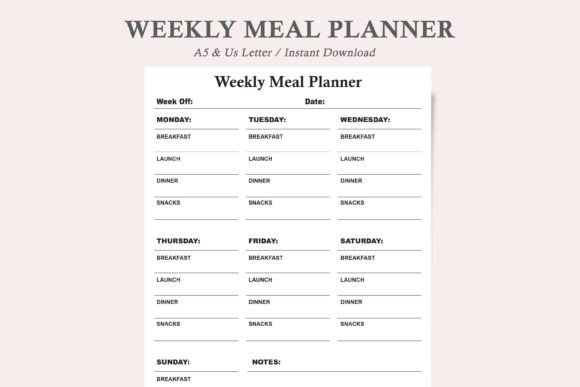
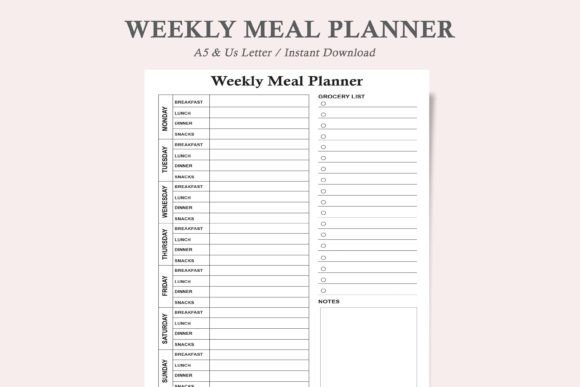
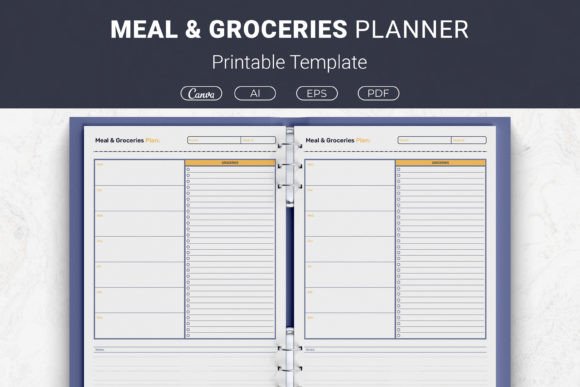
At its core, this planning system pairs a weekly meal grid with a coordinating grocery list and a notes section. That trio creates a seamless flow from intention to execution. You start by scanning your fridge, freezer, and pantry to see what needs using up. Then you fill the meal grid with dishes that incorporate those ingredients. Next, you extract exactly what you need from the grocery list template, adding only the missing items. The notes area captures reminders—like “defrost chicken Thursday morning” or “double the soup recipe for Friday’s lunch.”
This method delivers several immediate outcomes:
- Time saved: One focused planning block eliminates daily deliberation and multiple store runs.
- Money retained: Buying only what’s on the list curbs impulse buys and reduces restaurant spending.
- Portion awareness: Planning meals helps you cook appropriate amounts, preventing overeating or undereating.
- Creative momentum: With a framework in place, you’re free to experiment. Theme nights like “Meatless Monday” or “Sheet Pan Wednesday” become a fun challenge instead of a panic.
Many people discover that meal planning, rather than feeling restrictive, actually expands their culinary variety. When you’re not scrambling, you have the mental bandwidth to try a new recipe, incorporate seasonal produce, or adapt family favorites to be healthier. The Meal and Groceries Planner becomes a canvas for this creativity.
Turning the Planner into a Waste-Reducing Ally
Food waste is a massive household expense, with the average family throwing away hundreds of dollars in edible food each year. The planner’s layout directly addresses this by encouraging a “first in, first out” approach. Before you plan a single meal, you note which perishables are nearing their end. That half carton of sour cream becomes the base for a stroganoff; those slightly soft tomatoes transform into a quick pasta sauce. By intentionally linking your grocery list to your meal grid, you stop buying more than you can reasonably cook. This closed-loop system means grocery trips become purposeful and your refrigerator stays organized.
Leftovers also find a designated spot. Rather than hiding in opaque containers until they grow mold, they appear on the weekly grid as a planned lunch. The notes section is perfect for jotting down “repurpose roast chicken into Tuesday’s salad” or “freeze extra chili in individual portions.” These small habits compound into significant savings and a lighter environmental footprint.
Making Meal Planning Enjoyable, Not a Task
For those who dread the idea of rigid schedules, the Meal and Groceries Planner offers flexibility. You can use it loosely, planning only dinners and leaving breakfasts and lunches open for a rotation of staples. You might assign each family member a day to choose the meal, turning planning into a collaborative game. Stickers, colored pens, or highlighters can mark days when you’re eating out, celebrating, or trying a new dish. The goal is to tailor the tool to your personality. If digital planning feels more natural, the included Canva template link lets you customize and edit on a screen before printing or using it on a tablet. For those who love the satisfaction of pen on paper, the ready-to-print PDF files deliver crisp, clean pages.
The planner’s inviting design strips away the intimidation of starting from a blank sheet. With a clear grid and structured sections, it lowers the barrier to entry, making the routine feel doable even on hectic weeks. Over time, you’ll find that the 15-minute Sunday session becomes a cherished ritual—a quiet moment with a cup of coffee where you set the tone for nourishing yourself and your household.
Adapting the Planner for Different Lifestyles
No two households eat the same way, and the Meal and Groceries Planner accommodates that diversity without forcing a one-size-fits-all approach. Here’s how various users can benefit:
Busy Parents and Caregivers
Mapping out a week of family-friendly meals reduces the 5 p.m. chaos. You can batch cook on weekends by doubling recipes noted in the grid, then freezing half. The grocery list keeps you from forgetting the kids’ snack items, and the notes section tracks school lunch components. The planner becomes a central command post that everyone can reference.
Individuals Living Alone or Couples
Single-person households often struggle with portioning and boredom. Use the planner to intentionally cook once and eat twice, transforming tonight’s grilled salmon into tomorrow’s salad. The grid helps you rotate through a smaller repertoire while ensuring you don’t end up buying ingredients that languish. You can also plan around social meals, so your grocery list excludes days you’ll be dining out.
Those Focused on Health and Fitness Goals
Whether you’re tracking macros, managing a medical condition, or simply trying to eat more vegetables, the planner provides a bird’s-eye view of your nutritional intake. Plan balanced plates across the week, note hydration reminders, and schedule high-energy meals around workouts. The visual layout helps you spot patterns—like too many carb-heavy dinners in a row—and adjust before you shop.
Budget-Conscious Shoppers
If your goal is to slash your grocery bill, the planner is a non-negotiable ally. Start by inventorying your stock, then build the meal grid around sale items and pantry staples. Stick to the grocery list with almost religious discipline. Many users find they can trim $50–$100 monthly just by avoiding the “I might need this” purchases. Over a year, that’s a substantial sum.
Creators and Publishers on KDP
The package includes source files—AI Illustrator, EPS, and a Canva template—making it a seamless starting point for those building planners to sell on Kindle Direct Publishing or other platforms. The layouts are clean, professional, and come in four popular sizes: US Letter (8.5 x 11 in), A4 (210 x 297 mm), 7.5 x 9.25 in, and 6x9 in. You can brand it, tweak the design, and offer a high-quality interior that resonates with a wide audience. Even for personal use, having multiple size options means you can print at home and fit the planner into a binder, disc-bound system, or a standard three-ring notebook.
Practical Implementation Tips to Get Started Today
Adopting a new planning habit sticks best when you remove friction. Here are some grounded recommendations:
- Choose your format first. Print a few copies of the Meal and Groceries Planner at home on US Letter or A4 paper, or open the Canva template to edit digitally. Having the tool ready removes the “I’ll start later” barrier.
- Begin with a quick audit. Look through your fridge, freezer, and cupboards. Note items that need to be used in the next few days on the planner’s notes section.
- Pick a consistent planning day. Saturday morning or Sunday afternoon works for most people. Block 20 minutes in your calendar and treat it like any other appointment.
- Stock a backup meal. Designate one grid slot for a pantry meal—something you can always make from shelf-stable ingredients, like pasta with marinara or canned tuna patties. This safety net reduces stress if plans change.
- Involve others. If you share meals with family or roommates, let them contribute ideas. A three-minute brainstorming session fills the grid faster and builds buy-in.
- Review and adjust. After a month, reflect on what worked. Maybe you need fewer weekend meals planned because you prefer spontaneous outings. Shift the grid to focus on Monday through Friday and leave the rest flexible.
Remember that the Meal and Groceries Planner is a servant, not a master. If you swap Tuesday’s dinner with Thursday’s, or skip a planned lunch because a colleague invited you out, that’s perfectly fine. The planner’s value lies in the proactive mindset it fosters, not in rigid adherence.
Long-Term Gains That Go Beyond the Plate
As the weeks compound, you’ll likely notice shifts beyond the grocery receipt. The mental clarity from automating meal decisions cascades into other areas. You may find yourself with more energy in the evening because you’re eating balanced, home-cooked meals. Your kitchen may become less cluttered because you’re not buying excess inventory. Family mealtimes might grow more peaceful because the rushing and pleading have diminished. For many, the planner becomes a cornerstone of a simpler, more intentional lifestyle—one that values planning not as a constraint, but as a form of self-care.
The included package ensures longevity and adaptability. The Meal and Groceries Planner gives you editable AI files, EPS, PDFs ready to print, and a Canva template link, so you’re never stuck with a format that doesn’t suit your evolving needs. Whether you choose the compact 6x9 in size for a portable grocery companion or the roomy US Letter for a binder-based kitchen command center, the specifications are there. The 7.5 x 9.25 in option sits in a sweet middle ground, offering substantial writing space while fitting neatly on a countertop.
Start small. Pick one size, print a month’s worth, and commit to a 30-day experiment. Track your food waste, your spending, and your stress levels. The data may surprise you. With a reliable Meal and Groceries Planner in hand, the path to a nourished, budget-friendly, and less chaotic week is clearer than ever.