The Gentle Guide to Wide-Ruled Writing: Why Spacious Lines Matter for Young Writers and Beyond
Not all paper is created equal, and anyone who has watched a child labor over a sentence or an older adult strain to keep letters steady knows this truth intimately. The space between lines on a sheet of paper can shape the entire writing experience, influencing confidence, legibility, and even the joy found in putting words down. The Wide-Ruled Line Paper for Girl-V2 enters this conversation as a thoughtfully designed tool that respects the physical act of writing. It is not merely a stack of lined pages. It is a deliberate choice to give letters room to breathe, to give hands freedom to move without cramping, and to give developing writers a canvas that supports rather than constrains.
This article explores the world of wide-ruled paper through the lens of thoughtful design. We will examine why line spacing matters across different ages and abilities, how the physical specifications of a product like this one intersect with practical daily use, and where this type of writing paper fits into classrooms, homes, and creative practices. The focus remains on understanding the utility and design intelligence behind a seemingly simple object that holds surprising depth.
The Architecture of Space: What Wide-Ruled Actually Means
To appreciate what makes Wide-Ruled Line Paper for Girl-V2 distinct, we first need to understand the basic architecture of ruled paper. Standard college-ruled paper typically features horizontal lines spaced approximately 7.1 millimeters apart, with a narrow margin line running vertically down the left side. Wide-ruled paper, sometimes called legal-ruled or simply elementary-ruled, expands that vertical space to roughly 8.7 millimeters or more. That extra 1.6 millimeters may sound trivial, but for a young hand gripping a pencil or an older hand managing tremors, it represents the difference between control and frustration.
This additional space serves multiple functions simultaneously. It accommodates the larger letterforms that children naturally produce as they learn letter construction. A lowercase "g" that dips below the baseline or a capital "L" that stretches upward needs clearance. When lines crowd each other, descenders and ascenders collide, turning a careful writing effort into a muddy tangle. The generous spacing of wide-ruled paper prevents this visual chaos, allowing each letter to hold its own territory.
The design choice embedded in Wide-Ruled Line Paper for Girl-V2 reflects an understanding of motor development. Children in elementary school are still building the fine motor control required to consistently size their letters. Forcing them onto narrow-ruled paper too early can create bad habits—gripping the pencil too tightly, pressing too hard, or rushing through strokes to finish before fatigue sets in. Wide ruling gives permission to write larger, which in turn encourages a more relaxed grip and a more fluid motion. The paper adapts to the writer, not the other way around.
Beyond the Classroom: Unexpected Audiences for Generous Line Spacing
While elementary school students are the primary audience for composition books built on wide-ruled paper, the usefulness extends far beyond third-grade book reports. Several groups find genuine value in this format, and recognizing these audiences helps explain why a product like Wide-Ruled Line Paper for Girl-V2 deserves attention from a broader market.
Older Adults and Changing Vision
As eyes age, the ability to track fine details diminishes. Presbyopia, the gradual loss of near-focus ability, begins affecting most adults in their forties and progresses steadily. Cataracts, macular degeneration, and other age-related conditions further complicate the visual demands of writing. For seniors who enjoy journaling, maintaining correspondence, or simply keeping grocery lists legible, narrow ruling becomes a genuine obstacle. The lines blur together. Letters wander across boundaries. What was once automatic now requires intense concentration.
Wide-ruled paper addresses this by creating unmistakable visual separation between writing lines. The eye can easily locate the next line after glancing away. The spaces feel navigable rather than intimidating. For someone with visual impairment, this difference transforms writing from a source of anxiety back into a pleasure. The Wide-Ruled Line Paper for Girl-V2 works here because its design prioritizes clarity over density. There is no virtue in cramming more lines onto a page if those lines become unusable for the person holding the pen.
Teens and Casual Writing Habits
Teenagers represent an interesting middle ground. Many have mastered the mechanics of handwriting but find themselves returning to pen and paper for specific purposes. Bullet journaling, creative writing, song lyrics, and personal diaries often feel more authentic when rendered by hand. For these casual applications, wide-ruled paper offers a relaxed, low-stakes environment. The generous spacing reduces the pressure to fill every inch of the page, which can psychologically free a writer to explore ideas without the subconscious weight of efficiency.
A teen scribbling down poetry or sketching out a story benefits from the same spaciousness that helps a second grader practice cursive. The difference lies in the purpose. The younger student needs the space for motor control. The teen appreciates it for the breathing room it gives to thoughts. Both are valid. Both point to the same design truth: writing is not just about transmitting information. It is a physical, sensory act, and the container shapes the content.
Large Handwriting and Personal Comfort
Some adults simply have naturally large handwriting. Whether due to hand size, personal style, or neurological wiring, their letters take up more real estate. Trying to squeeze large handwriting onto narrow ruling leads to crossed-out words, smudged ink, and constant frustration. Wide-ruled paper acknowledges this diversity without pathologizing it. There is no correct handwriting size, only handwriting sizes that match or clash with the available space. Wide-Ruled Line Paper for Girl-V2 sides with comfort, offering a format that welcomes large, expressive script without judgment.
Physical Specifications and Why They Matter
The details of construction often separate genuinely useful stationery from forgettable alternatives. When examining Wide-Ruled Line Paper for Girl-V2, several specifications stand out as practically meaningful rather than just technically listed.
The dimensions, 8.5 by 11 inches, represent standard letter size. This matters because it ensures compatibility with binders, folders, backpacks, and desk drawers designed around this universal format. There is no awkward trimming or folding required. The paper fits into existing systems without friction. For teachers collecting assignments or parents organizing schoolwork, this standardization prevents the headache of oddly sized sheets that refuse to stack neatly.
The 120-page count delivers a substantial writing reserve without becoming unwieldy. Sixty sheets, when pages are numbered on both sides, provides enough capacity for a full semester of composition practice, a lengthy journaling project, or an extended creative writing endeavor. The length respects continuity. Writers can develop ideas across pages without frequently swapping notebooks, which helps maintain flow and momentum.
The 300 DPI resolution speaks to print quality. Line crispness matters more than casual users might assume. Faint, broken, or blurry guidelines force the eye to work harder, subtly increasing cognitive load during an activity that already demands concentration. High-resolution printing ensures that lines appear as confident, continuous guides rather than hesitant suggestions. This is especially important for users with visual impairments, for whom every point of contrast counts.
Bleed settings included in the file format indicate readiness for professional printing without trimming errors. For creators, publishers, or individuals printing at home, this technical consideration eliminates the frustration of white edges cutting into lined areas. The design accounts for the realities of production, making the final output match the intended layout.
Design for a Specific Audience Without Limiting Use
The designation "for Girl" might initially suggest a narrow target, but design choices that appeal to one group often resonate more broadly when executed with taste. A product aimed at young female students does not require excessive ornamentation to succeed. Subtle visual identity, color choices that feel warm and inviting, and overall aesthetic coherence can make a notebook feel personal without alienating anyone who picks it up.
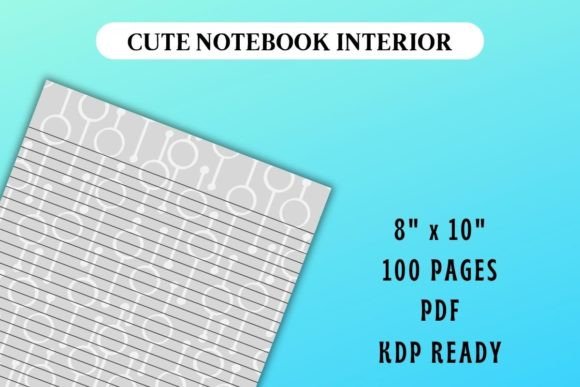
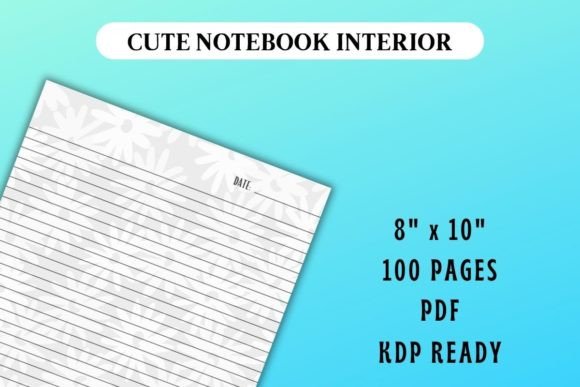
The New Design 🎇Unique Design 🎉 noted in the product description signals an intentional refresh. Design iteration in stationery involves balancing familiarity with novelty. Too much change disrupts user expectations. Too little makes the product indistinguishable from competitors. Effective design updates preserve the functional core—the wide ruling, the page dimensions, the paper quality—while introducing visual elements that feel current and engaging. A cover pattern, a thoughtfully chosen color palette, or a subtle motif can breathe personality into a practical object.
What makes a design "unique" in the crowded notebook market often comes down to cohesion. Colors, patterns, and typography work together rather than competing. The design supports the writing experience rather than distracting from it. When a young student feels that her notebook reflects her personality, she is more likely to open it willingly, more likely to treat writing as an extension of self rather than a chore. This psychological dimension of stationery design deserves more attention than it typically receives.
Wide Ruling and the Writing Brain
There is emerging interest in how physical writing conditions affect cognitive processes. Handwriting activates neural pathways distinct from typing, engaging motor planning, visual recognition, and memory encoding in unique combinations. The spatial constraints of the page influence this activation. Narrow ruling demands more attention to letter sizing and spacing compliance, diverting cognitive resources away from composition and idea generation. Wide ruling reduces these demands, freeing the brain to focus on what the writer wants to say rather than how to fit it within tight boundaries.
For students learning to write, this cognitive offloading is crucial. A child who struggles to keep letters between narrowly spaced lines has less mental bandwidth available for spelling, grammar, and narrative structure. The physical act of writing consumes attention that should be directed toward the content being written. By providing generous line spacing, Wide-Ruled Line Paper for Girl-V2 indirectly supports language development. The paper becomes an invisible scaffold, present enough to guide but unobtrusive enough to fade from conscious awareness during the creative act.
Similar dynamics apply to adults using wide-ruled paper for brainstorming or journaling. When the mechanics of writing recede into the background, thoughts flow more freely. The hand moves without constant micro-corrections. Ideas connect to each other rather than to the edge of the line. This may be one reason why many prolific journalers instinctively prefer wider ruling, even when their handwriting is small enough to fit on college-ruled pages. The spaciousness invites expansiveness.
Practical Scenarios Across Environments
Understanding where and how wide-ruled paper gets used illuminates its versatility. In elementary classrooms, teachers distribute composition books at the start of the year and watch handwriting evolve across the pages. The consistency of using the same ruling all year builds muscle memory. Students internalize letter proportions calibrated to the space available, developing a handwriting style that remains legible as they grow.
In occupational therapy settings, wide-ruled paper serves as an intervention tool. Therapists working with children who have dysgraphia, fine motor delays, or coordination challenges frequently recommend wider ruling as part of a comprehensive approach. The paper reduces one source of difficulty, allowing the therapist to focus on grip, posture, and letter formation without the compounding stress of spatial constraint. Progress measured in small victories—a full sentence completed without straying from the line, a paragraph written at consistent size—builds confidence that transfers to other writing contexts.
At home, parents discover that wide-ruled notebooks smooth the transition from school writing to personal writing. A child who uses wide-ruled paper in class finds comfort in the same format for journaling or story writing at the kitchen table. The familiarity signals that writing belongs everywhere, not just within classroom walls. Wide-Ruled Line Paper for Girl-V2 becomes a bridge between academic requirement and personal expression.
For older adults in assisted living communities, wide-ruled notebooks often appear in memory care programs. Writing exercises designed to preserve cognitive function benefit from accessible formats. Residents can focus on recalling names, dates, and narratives without struggling to see the lines. The physical ease of writing on well-spaced paper encourages participation and extends the duration of engagement.
Selecting and Using Wide-Ruled Paper Effectively
Choosing the right wide-ruled product involves evaluating a few key factors beyond the ruling itself. Paper weight and opacity affect how writing appears and whether ink bleeds through to the reverse side. Heavier paper stocks, typically measured in pounds or grams per square meter, resist ghosting and allow both sides of each sheet to be used without distraction. The Wide-Ruled Line Paper for Girl-V2 with its 120-page count suggests a balanced weight that provides sufficient opacity for standard writing instruments.
Binding style matters for usability. Spiral binding allows notebooks to lie flat, which helps left-handed writers avoid the uncomfortable wrist angle that glued spines sometimes force. Composition-style binding, with pages sewn or stapled and a taped spine, offers durability and a traditional feel. The choice depends on personal preference and intended use. A notebook that stays open on its own respects the writer's concentration by not requiring a hand to hold it down.
Writing instrument compatibility affects the experience significantly. Pencils glide differently than ballpoint pens. Gel pens, fountain pens, and felt-tip markers each interact uniquely with paper surfaces. Testing a small corner with the preferred writing tool before committing to a full page prevents the disappointment of unexpected feathering or bleed-through. Most standard wide-ruled paper handles pencils and basic ballpoints without issue, but heavier inks deserve a quick compatibility check.
The Quiet Dignity of Purpose-Built Tools
There is something quietly dignified about tools designed for specific needs without condescension. Products that serve children, older adults, or people with disabilities sometimes carry an unfortunate stigma of being "lesser" versions of the "real" thing. Wide-ruled paper challenges this framing by simply being paper—useful, attractive, and well-made—that happens to have more generous spacing. It is not a simplified or dumbed-down alternative. It is a format matched to a purpose.
The Wide-Ruled Line Paper for Girl-V2 exemplifies this principle by combining practical specifications with a design sensibility that treats its audience with respect. Young girls who use this paper are not being given something remedial. They are being given something appropriate. Older adults who choose it are not admitting defeat. They are selecting the tool that works. The distinction matters because dignity shapes how people feel about writing, and how people feel about writing shapes whether they continue to do it.
Writing by hand persists in a digital world precisely because it offers something screens cannot replicate. The physicality of it—the pressure of the pen, the texture of the paper, the visual rhythm of lines filling with words—engages the senses and anchors memory. Preserving this practice means providing formats that welcome all hands, all eyes, and all abilities. Wide-ruled paper, in its unassuming way, does exactly that.