Evaluating the 2024-2026 Monthly Planner Sunday Start for Long-Term Organization
Organizing three years of personal and professional commitments in one place requires a thoughtful choice of tools. The 2024-2026 Monthly Planner Sunday Start is a digital download designed to serve exactly that purpose—a single PDF file covering January 2024 through December 2026, structured around a Sunday-start weekly rhythm. While its convenience and reusability are clear, deciding whether it aligns with your habits, planning style, and long-term goals involves weighing its practical strengths against some inherent tradeoffs.
Understanding the Planner’s Structure and Scope
At its core, this is a three-year monthly planner delivered as a print-ready PDF. It contains 154 pages formatted for A4 paper (8.27×11.69 inches), though it can also be printed on 8.5×11 or 8.25×11 sheets. The file is set up without bleed and tested for Amazon KDP, which means you can print it at home, at a local shop, or even upload it to a print-on-demand service for a bound copy. A Sunday start calendar layout means each week begins on Sunday—a preference common among those following a traditional Western calendar or who mentally group weekends starting with Sunday.
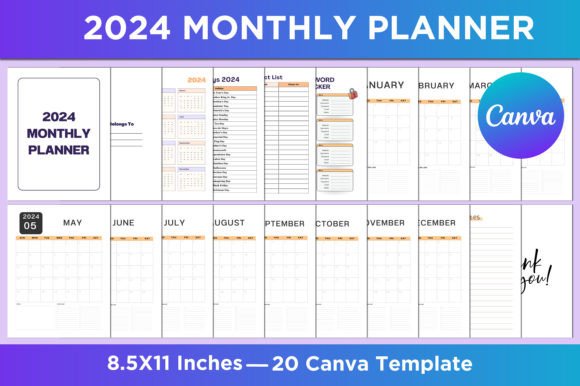
Beyond monthly grids, the PDF integrates several supporting sections: a contact page, two personal schedule templates, password log pages, calendar overviews with holidays, birthday and important date logs, daily planner sheets, and additional notes pages. The inclusion of a source file for the cover is a bonus for anyone looking to customize the external appearance before printing.
Who Stands to Benefit Most
This planner appeals strongly to individuals who value simplicity, continuity, and control over their physical planning tools. If you recognize yourself in any of the following scenarios, the 2024-2026 Monthly Planner Sunday Start may be a practical choice:
- You prefer a Sunday-start calendar and have struggled to find multi-year planners that match that format.
- You want to avoid buying a new planner every year and prefer having three years bound together, reducing repeated setup and allowing for long-range project tracking.
- You appreciate the ability to print multiple copies—for a home office, a backpack, or as a backup when one gets filled with notes.
- You rely on a mix of monthly overviews and daily pages rather than weekly spreads, giving you flexibility to use as much or as little detail as each month demands.
- You need a KDP-ready file to create a professional-looking paperback planner to sell or simply to have a polished bound edition without designing from scratch.
Additionally, the inclusion of password logs and important date trackers turns the planner into a life-management hub, not just a calendar. For those juggling family birthdays, subscription renewal dates, or multiple login credentials, these extras reduce the need for separate notebooks.
Practical Advantages Worth Noting
One of the most compelling aspects of a PDF-based planner is its reusability. Once purchased, you can print it as many times as needed, year after year, even beyond the 2024–2026 date range if you use correction fluid or simply treat undated pages as flexible templates. The 300 DPI quality ensures crisp printing, and the variety of trim size options means you are not locked into one paper format—a useful feature if you prefer disc-bound systems, where trimming pages is common.
The layout’s combination of monthly grids and daily planner sheets offers a balance between high-level planning and daily task capture. The “calendar overviews with holidays” give a quick glance at the year, which is especially handy for forward-planning vacations or project deadlines. Since the file is KDP-tested, the formatting holds up well under print-on-demand specifications, sparing you the headache of reformatting margins or gutters.
Another less obvious advantage is the ability to prototype your ideal planner. Because you receive a source file for the cover, you can personalize the front and back, add your name, or adjust the design to match your taste before committing to a printed version. This degree of customization is typically absent in off-the-shelf planners.
Tradeoffs and Potential Limitations
No single planner fits every organizational style, and the 2024-2026 Monthly Planner Sunday Start comes with considerations that may prompt you to explore alternatives:
- It is purely a physical, print-based solution. If you primarily rely on digital calendars like Google Calendar or Outlook for reminders, the printed pages may end up unused. While you can annotate a PDF on a tablet, this planner is not optimized for interactive digital use; it lacks hyperlinked tabs or form fields.
- The Sunday start may be a mismatch. If your work week or personal habit follows a Monday start, using this layout could cause confusion or require mental adjustment each time you plan. Switching a deeply ingrained weekly rhythm is rarely worth the friction.
- Daily pages are limited. The product description mentions “Daily Planner Sheets,” but in a 154-page book spanning three years, there cannot be a daily page for every single day. It is likely that daily pages are undated templates repeated a certain number of times. If you need a page per day consistently, you may quickly run out and need to print additional copies or supplement with a separate daily journal.
- Fixed date range. The planner runs strictly from January 2024 to December 2026. If you are evaluating this in late 2024 or early 2025, you have already missed several months, though you could still use the remaining months and the undated sections. If you seek a perpetual planner without printed dates, this is not it.
- Binding costs and effort. Printing 154 pages at home and binding them (via coil, disc, or perfect binding) requires equipment and some skill. Professionally printing can be an added expense, which may offset the initial savings of a digital download.
When Alternatives May Be Worth Considering
If your planning style involves frequent rescheduling, collaboration with others, or heavy reliance on time-blocking per hour, a monthly layout might feel too high-level. A weekly planner with vertical hourly slots or a digital calendar with shared access could serve you better. Similarly, if you dislike carrying a heavy planner, you might find an A4-sized book too bulky for daily portability; a compact A5 or personal-size binder with printable inserts could offer similar reusability in a more travel-friendly format.
For those who prefer a Monday start, several other three-year planners exist in the printable market, or you could use blank monthly templates and fill in dates yourself—though that requires more manual work. If you plan to use the PDF commercially on KDP, note that while it is KDP-tested, you should always verify that the provided cover file meets the latest trim size and bleed requirements for your chosen print option. The landscape of print-on-demand platforms evolves, and what worked six months ago may need tweaks.
Cost-conscious users should also factor in printing and binding expenses. A downloadable PDF is often inexpensive, but after printing and binding, the total investment may approach that of a pre-printed three-year planner. However, the ability to print duplicates and replace damaged sections can outweigh this over time.
Making a Well-Informed Decision
To decide whether the 2024-2026 Monthly Planner Sunday Start fits your needs, consider these practical questions:
- Does my week naturally begin on Sunday? If you consistently think of Sunday as the first day, this planner will feel intuitive. If not, the misalignment might subtly undermine your planning habit.
- How will I use the daily sheets? If you need comprehensive daily pages, estimate how many you truly require per year and compare that to the number included. Be realistic about whether you will supplement by printing extra copies or using the notes pages as overflow.
- What is my binding plan? If you don’t have access to a binding machine, a local print shop can do it, but you may want to call ahead for pricing. Alternatively, consider a three-ring binder with sheet protectors for a less permanent but highly flexible solution.
- Am I comfortable with a fixed date range? Accept that this planner covers a specific period. After December 2026, the monthly grids lose relevance, though the undated logs and notes remain usable. If you anticipate wanting a “forever” system, look for undated printables instead.
- Do I need the extras? Password logs and personal schedules add value only if you use them. If you manage passwords digitally, those pages may become dead weight. Conversely, if you’ve been meaning to corral those details into one place, their inclusion is a practical bonus.
Balancing Expectations and Real-World Use
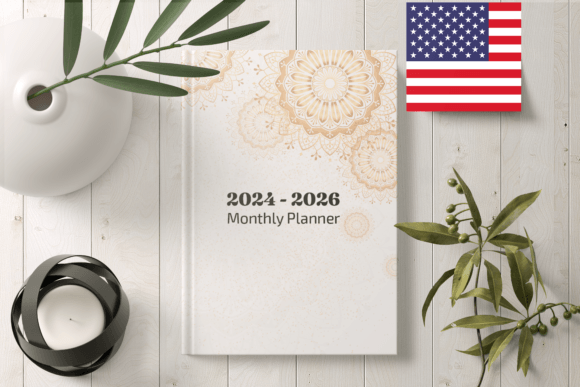
The 2024-2026 Monthly Planner Sunday Start delivers on its promise: a clean, KDP-tested, multi-year planner with a Sunday-start and a luxury cover design. Its strength lies in offering a structured framework that you can personalize through repeated printing and custom covers. The tradeoffs are inherent to fixed-date, print-only planners and are not flaws but rather characteristics that may or may not align with your habits. By examining your weekly rhythm, daily detail needs, binding preferences, and tolerance for date-bound formats, you can evaluate whether this planner will genuinely support your organizational goals across the coming years, or if a different approach—perhaps an undated digital/printable hybrid—might serve you better.
Ultimately, the best planner is the one you consistently reach for. If a Sunday-start, three-year printed book helps you see the big picture while anchoring daily tasks, then the upfront effort of printing and binding is a small investment in sustained clarity.