Meeting Agenda and Meeting Notes That Drive Real Results
Most professionals spend roughly five to six hours per week in meetings, yet a staggering number of those gatherings lack clear direction. People walk out unclear about decisions, uncertain about next steps, and wondering why they were invited in the first place. A well-structured Meeting Agenda paired with intentional Meeting Notes changes that dynamic entirely. It transforms unfocused discussions into productive sessions where time feels well spent rather than lost.
The challenge isn't that teams don't care about efficiency. It's that without a repeatable system, every meeting starts from scratch. You spend the first ten minutes figuring out what to talk about, the middle portion drifting between topics, and the final stretch rushing through the items that actually matter. A thoughtful agenda template eliminates that friction before anyone even sits down.
Why Most Meeting Agendas Fall Short
You've probably received calendar invites with a single vague line in the description field. Something like "discuss Q3 plans" or "touch base on project." Those aren't agendas. They're placeholders that signal the organizer hasn't done the pre-work necessary for a focused conversation.
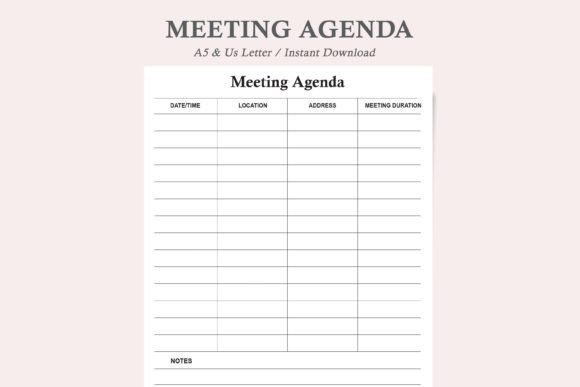
An effective Meeting Agenda does more than list topics. It frames each item around a specific outcome. Are you sharing information, gathering feedback, making a decision, or brainstorming ideas? When participants know the purpose of each segment, they show up prepared to contribute in meaningful ways. The agenda sets expectations about what success looks like before the meeting begins.
Equally important is how the agenda interacts with time. Assigning realistic durations to each item forces prioritization. If you have 45 minutes and six discussion points, something has to give. That constraint is healthy. It pushes organizers to distinguish between what genuinely requires group input and what could be handled asynchronously.
Meeting Notes as an Accountability Tool
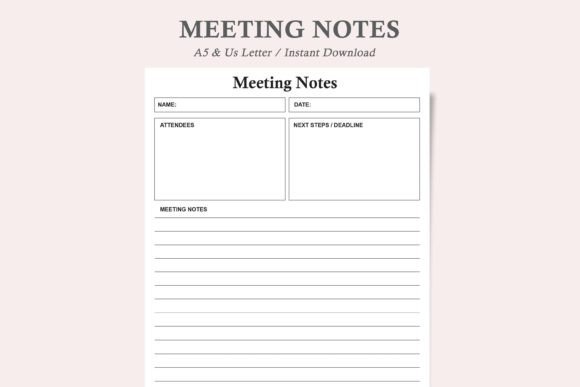
While agendas shape what happens during a meeting, Meeting Notes capture what actually transpired. The distinction matters. Notes aren't a transcript. They're a record of decisions made, action items assigned, and key points raised that influence future work. Without them, institutional memory fades fast. Two weeks later, nobody remembers who volunteered to follow up on the vendor proposal or what criteria the team agreed to use for evaluating candidates.
The best meeting notes follow a consistent structure. They tie back to the agenda items, making it easy to trace outcomes to the original discussion points. They clearly designate who owns each action item and when it's due. They highlight decisions so anyone who missed the meeting can quickly understand what changed and what it means for their work.
This is where the concept of Meeting Minutes comes into sharper focus. While notes can be informal and personal, minutes serve as an official record. They carry more weight in contexts where documentation matters for compliance, stakeholder alignment, or contractual obligations. Having a template that accommodates both casual note-taking and formal minute-keeping gives you flexibility across different meeting types.
One System Across Multiple Meeting Types
The beauty of a well-designed Meeting Agenda Meeting Notes system is its adaptability. The same underlying structure works for a weekly team standup, a quarterly strategy review, a client kickoff call, or a one-on-one coaching session. What changes is the content, not the framework.
Team Collaboration and Project Discussions
Project teams live and die by their communication cadence. A Meeting Planner that integrates agenda setting with note capture creates continuity between sessions. You can reference last week's decisions at the start of this week's meeting. You can track whether action items from two meetings ago ever got completed. That thread of accountability prevents the drift that plagues long-running initiatives.
Consider a marketing team planning a product launch. Their weekly meetings involve updates from content, design, paid media, and PR. Each stream has dependencies on the others. The agenda carves out dedicated time for cross-functional updates, while the Meeting Notes section captures where blockers exist and who's responsible for resolving them. Without that structure, the meeting becomes a series of disconnected status reports with no connective tissue.
Client and Stakeholder Engagements
External meetings carry additional weight. Clients want to know their time is respected. They want to see progress and understand next steps. Walking into a client meeting with a printed or digital Meeting Agenda signals professionalism before you speak a word. It demonstrates that you've prepared, that you have a plan, and that you value their limited attention.
Afterward, sharing cleaned-up Meeting Minutes within a few hours reinforces that impression. The client sees exactly what was discussed, what decisions were reached, and what deliverables are coming. That documentation becomes a reference point for future conversations and, in some cases, a safeguard against scope creep or misaligned expectations.
Educational and Workshop Settings
Educators and workshop facilitators use agendas differently but no less effectively. A session agenda sets the learning arc. Participants know what they'll explore, in what order, and for roughly how long. It reduces anxiety and helps people mentally prepare. After the session, facilitators can annotate the agenda with notes about what resonated, what questions surfaced, and what adjustments they'd make next time.
This reflective practice turns every workshop into a building block for better future sessions. Over time, you accumulate a library of tested agendas annotated with real-world observations. That's far more valuable than starting from a blank page every time.
Why Physical and Digital Formats Both Matter
Some people prefer typing notes during meetings. Others find that screens create distance and distraction. A printable Meeting Agenda template bridges that preference gap. You can print a fresh page for each meeting, write notes by hand, and scan or photograph the results for digital storage. Or you can fill it out on a tablet with a stylus, combining the tactile benefits of handwriting with the convenience of digital organization.
The availability of two common sizes—US Letter and A5—means the template adapts to different contexts. US Letter fits standard binders and clipboards for office settings. A5 is more portable, slipping into smaller notebooks or folios for meetings on the go. That flexibility seems minor until you're juggling a laptop bag, a coffee, and a notepad while walking into a conference room.
An ink-friendly, minimalist design also matters more than people realize. Heavily decorated templates with excessive graphics compete for attention and consume printer toner. A clean layout puts the focus on your content, not on decorative elements. It's also easier to scan quickly during a meeting when you need to find a specific action item or decision from earlier in the session.
Building a Repeatable Meeting Rhythm
The value of a Meeting Agenda Meeting Notes Meeting Minutes Project Planner system compounds over time. One well-run meeting feels good. Ten well-run meetings in a row build trust and momentum. Your team starts arriving on time because they know the first five minutes won't be wasted on settling in. They come prepared because the agenda gave them advance notice of what to think about. They leave with clarity because the notes captured exactly what they need to do next.
This rhythm extends beyond individual meetings. When you use a Meeting Tracker or log approach, you can look back over a quarter and see patterns. Which meetings consistently ran over time? Which action items kept getting carried forward without resolution? Which topics generated the most productive discussion versus the most circular debate? Those insights help you refine not just individual agendas but your overall approach to meetings as a management practice.
Practical Considerations When Getting Started
Implementing a new meeting structure requires a brief adjustment period. Start by introducing the agenda template at the beginning of your next recurring meeting. Explain that you're trying to make better use of everyone's time. Frame it as an experiment rather than a mandate. Most colleagues will appreciate the effort once they experience a meeting that starts and ends on time with clear outcomes.
Send the agenda at least 24 hours in advance. That gives participants time to review, prepare thoughts, suggest additions, and identify anything they need to bring or research beforehand. A last-minute agenda isn't much better than no agenda at all. The lead time is where much of the productivity gain actually lives.
During the meeting, designate someone to take notes. Rotating that responsibility prevents any single person from disengaging while also building shared ownership of the documentation. The note-taker doesn't need to capture every word. They should focus on decisions, action items with owners and deadlines, and any notable points of disagreement or concern that might need revisiting later.
After the meeting, distribute the notes promptly. Same day is ideal. Next morning is acceptable. Anything later and the momentum starts to fade. The prompt follow-through signals that the meeting's outcomes matter and that accountability isn't just a concept discussed in the room but a practice carried into the work itself.
Making Every Gathering Count
Meetings aren't going away. Remote work, hybrid schedules, and distributed teams have made structured communication more essential than ever. What can change is how we approach them. A thoughtful Meeting Agenda paired with consistent Meeting Notes isn't revolutionary. It's simply the disciplined application of a practice that has always worked for people who value their time and the time of those around them.
The templates, the formats, the specific sections—those are tools. What matters is the habit they support. When you sit down to plan a meeting and reach for a structured agenda rather than a blank page, you're making a small decision that ripples through the rest of your day. You're choosing clarity over ambiguity, preparation over improvisation, and respect over assumption.
Over a career, that small decision repeated hundreds or thousands of times adds up to something significant. It shapes how colleagues perceive your leadership. It influences whether your projects stay on track. It determines whether the hours spent in conference rooms and video calls feel like investments or expenses. The difference between a productive meeting and a wasted one often comes down to what happened before anyone entered the room and what gets documented before anyone leaves.